Brightness must have depth.
Too-white ceramic without translucency can look artificial.
Veneers redesign the visible smile surface. The disciplined plan changes shape, edge and shade while preserving enamel where the case allows.
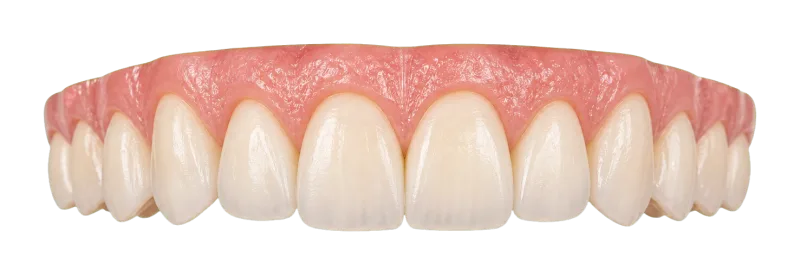
Too-white ceramic without translucency can look artificial.
Length, corner shape and width decide whether the smile feels soft or bold.
Veneers should work with the visible smile, not ignore it.
Healthy enamel helps the bond. Preparation can be none, minimal, or conventional, but every removed surface needs a reason.
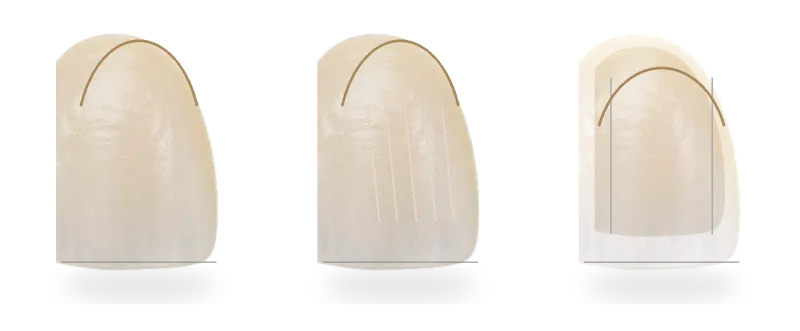
Works when tooth position, color and contour already create space for a thin shell.
Small enamel adjustment can create a natural edge, cleaner emergence and better seating.
Dark color, rotation, old restorations or larger shape changes may need more space.
Start with the problem. Whitening, bonding, alignment, gum shaping, veneers and dental crowns solve different failures.
If shape is already good and stain responds, do not cover the tooth.
Veneer only when color cannot be corrected or shape also needs design.A small edge or corner may need a direct repair, not a new ceramic surface.
Veneer only when the visible surface needs broader shape and shade control.Stable front teeth can be redesigned when proportion, edge, color and surface all need control.
Enamel, gums and bite must still support bonding.Crowding, rotation or a collapsed bite can make veneers thick or forced.
Align first, then decide whether surface design is still needed.Decay, cracks, root canal history or large fillings make this a strength problem.
A veneer is not full-tooth protection.
If the tooth is weak, infected, decayed or poorly positioned, the plan changes before ceramic is chosen.
No one should commit blindly. The planned length, edge rhythm, shade, gum frame and bite are reviewed before the final ceramics are made.

Photos, shade, gums and bite set the design limits.
A mock-up previews length, width, edges and smile line.
Final veneers follow the approved design. Shade and bite are checked before bonding.
Material choice should be visible: translucency, thickness, repairability, polish, bite force and the amount of enamel available.

Problem first. Repair size, color change, enamel, available space and bite decide the material.

Repairable resin for chips or small additions. It is conservative, but polish and color need more maintenance.

A lab-made ceramic surface when strength, stable shape and translucency all matter.

Used for delicate enamel-like light, fine edge character and subtle natural variation.

An additive shell only works when added shape will still look natural, not bulky.
A premium quote should name the teeth, material, preview, inclusions, exclusions and what still needs a clinical exam. Review the clinic’s dental treatment cost guide.
Exact fee follows records and exam. Tooth count, included steps and separate items should be visible before booking.
Name the teeth and whether the plan is limited, full smile-zone or mixed.
Deposit, balance, taxes and cancellation terms should be written before booking.
Five clear photos help estimate the smile zone. The dentist still needs exam findings before the final treatment plan.
Clean light, no filter, camera straight ahead.
Show upper and lower front teeth clearly.
Bite gently. Keep the camera level.
Turn slightly and smile naturally.
Repeat from the other side.
First decision: visible tooth count.
A quote is weak if tooth safety is ignored.
Final color must blend with uncovered teeth.
Inflamed or uneven gums can distort the result.
Bite decides whether ceramic edges are protected.
The quote should not hide behind one total.
Veneers need clean margins, controlled bite force and early review when something feels off.
Ceramic resists stain, but the tooth edge and bonded margin need daily care.
Wait for numbness to fade. Start gently and avoid hard foods.
The veneer will not decay; exposed tooth at the margin can. Brush and floss gently.
Grinding, clenching and hard-object biting can chip edges or overload the bond.
Follow-up checks bite points, gums, margins, rough edges and early wear.
These should improve. Bite should feel balanced after numbness fades.
Early review protects the bond, tooth and final polish.
Long-term performance depends on enamel, material, bite, margins and maintenance.
Questions are ordered by decision moment: before, during planning and after bonding.
Some cases need little preparation. Others need space for shape or color masking. Enamel is preserved when possible.
Often, no. If enamel is adjusted, the tooth may continue to need a restoration.
No. Active decay, gum disease, unstable bite, severe crowding or weak tooth structure can make another treatment safer.
A crown may be safer when the tooth is cracked, weak, heavily filled, root canal treated, or needs full-coverage protection.
It depends on visible teeth, color blend and whether the change is limited or full smile-zone.
Yes, when brightness, translucency, length, edges, gums and lips are planned together.
Often, yes. Ceramic veneers do not bleach after bonding, so shade planning comes first.
Not always. Bonding is conservative and repairable; ceramic gives stronger polish and color stability.
Longevity depends on material, enamel bonding, bite, hygiene and maintenance.
Yes, especially with heavy bite force, grinding, nail biting or using teeth as tools.
Porcelain is more stain resistant than natural enamel or composite, but margins, bonding resin and untreated teeth still need maintenance.
It should name teeth, veneer count, material, preview, whitening or gum work, bite risks and exclusions.