Medical history, medications, diabetes control and immune status can change timing.
One Missing Tooth
Single Dental
Single Dental
Implant.
Replace one tooth without cutting healthy neighbors. See more on single dental implants in Mexico at the main practice.
Use when
One tooth
Scan first
Health + bone
Restore
Ceramic crown
Candidacy First
Fit
Fit
first.
A dental implant is a surgical medical device, not just a cosmetic tooth. The first question is whether the mouth and the patient can heal around it.
Active gum inflammation must be controlled before the implant is treated as predictable.
The scan must show enough width, height and safe distance from nerves or sinus spaces.
Smoking, heavy clenching and poor plaque control can raise the risk of delayed healing or failure.
The patient has to be able to clean it and return for professional review.
Diagnostic Records
Records
Records
first.
Records separate a simple implant from a graft-first case, a bridge case, or a site that needs infection control. Photos show the smile; scans decide the site.
What gets checked
CBCT / X-ray
Bone, roots, nerves, sinus.
Photos
Smile line, temporary visibility.
Bite
Bite force and crown contacts.
Exam
Gums, spacing, neighbors.
The scan shows bone volume, root space, nerve clearance and sinus limits.
Gum thickness and shape decide how natural the crown can emerge.
The teeth beside the gap help decide whether an implant, bridge or crown repair is cleaner.
Clenching, deep bite or heavy contacts can change crown design and protection.
Decision Gates
Prove
Prove
the site.
After records, decide whether the implant can be placed now or whether extraction, grafting, infection control or gum shaping should come first.
Thin or collapsed bone may need grafting before placement.
An infected failing tooth can change extraction, healing and timing.
The gap must allow the implant, connector and ceramic shape to fit.
Grinding or a deep bite can change crown material and temporary use.
The smile-zone plan should say how the tooth will look while healing.
What You Are Buying
Root below,
Root below,
crown above.
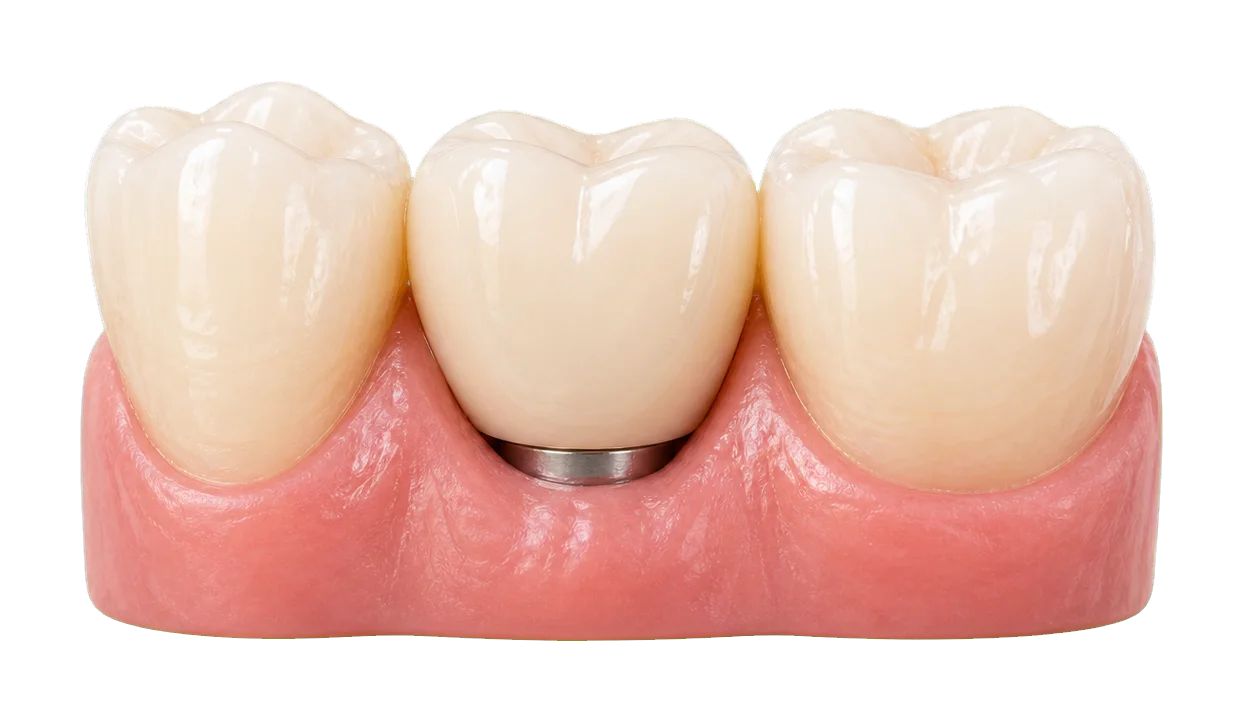
The visible tooth depends on the invisible stack beneath it. The quote should name all three.
- Implant postThe titanium root support placed in the bone.
- AbutmentThe connector that shapes the transition through the gum.
- CrownThe visible ceramic tooth, shaded and adjusted to the bite.
Site Preparation
Build the
Build the
foundation.
If the tooth is failing, infected, or the ridge has collapsed, the first treatment may be preparing the site rather than placing the implant immediately.


Sequence rule
Immediate placement is not always the cleaner plan. Infection, thin bone, gum collapse or bite pressure can make a staged site safer and more precise.
Surgery Day
Place it
Place it
calmly.
Placement is usually an outpatient surgical visit. The useful question is what will be numbed, guided, protected and checked before loading begins.
Local anesthesia is planned before the site is prepared.
The post is positioned from the scan, crown room and nearby anatomy.
The gum is closed or shaped with a healing cap depending on the loading plan.
Swelling, soreness or minor bleeding can happen; worsening symptoms need review.
After surgery
Soft foods, hygiene instructions, medication directions and follow-up visits are part of treatment. Pressure on the implant is controlled until the site is ready.
While It Heals
Plan the
Plan the
temporary.
The temporary tooth is part of the surgical plan. In the smile zone, the patient should know how the gap will look and whether the implant must stay unloaded.
A visible missing tooth needs an esthetic temporary option before treatment starts.
The temporary can look like a tooth without asking the implant to chew too early.
Immediate placement is only considered when bone, infection and bite conditions allow it.
Waiting is often the cleaner choice when tissue needs time before the final crown.
Ask before surgery
Will the temporary be removable, bonded, or avoided because pressure must stay off the implant? That answer belongs in the written plan.
Healing To Crown
Bone sets
Bone sets
the schedule.
After placement, the sequence pauses for bone integration before the connector and final crown are loaded.
Let bone hold.
The implant needs time to connect with bone before normal chewing force.
Shape tissue.
A healing cap or abutment guides the gum where the crown will emerge.
Design crown.
The final tooth is made from records of the implant position, bite and shade.
Adjust bite.
The crown is tightened, checked for cleaning access and refined against the bite.
Quote Decoder
No hidden
Included
Core restoration.
Verify
Site path.
Separate
Case extras.
No hidden
parts.
A complete estimate separates the implant restoration from diagnosis-dependent items: extraction, grafting, sedation, temporary tooth and bite protection.
Implant body, abutment and final crown should be visible in writing.
Records decide extraction, grafting, staging, abutment timing and temporary pressure.
Graft, extraction, night guard, sedation or travel timing should not be hidden.
Estimate map
one tooth
- X-ray / scan review
- required
- Implant post
- brand named
- Abutment connector
- included or listed
- Final crown
- material named
- Temporary tooth
- esthetic plan stated
- Bone graft
- case dependent
- Return visit
- timing written
- Maintenance
- cleaning access explained
Clarify before deposit: final timing can change if infection, thin bone, sinus or nerve position, bite force or temporary-tooth needs change the sequence.
Aftercare & Longevity
Keep it
Keep it
quiet.
A finished implant still needs maintenance. The crown margin, gum tissue, bite force and cleaning access decide how calm it stays over time.
Brush and clean where the crown meets the gum so plaque does not sit at the implant.
Grinding or clenching may require bite adjustment, review or a night guard.
Hygiene visits let the team monitor gum health, crown contour and early inflammation.
If the crown chips, loosens or wears, it can often be evaluated without replacing the implant.
Long-term rule
The implant is not a natural tooth. It still needs professional maintenance, bite control and fast review if the gum bleeds, the crown feels loose or chewing changes.
Clinical Guardrails
Selected
Selected
carefully.
Single implant crowns can be predictable in selected cases. The serious work is case selection: general health, periodontal status, bone volume, infection control, surgical sequence, bite force, temporary planning and maintenance.
Source
- FDA overview of dental implant systems, candidacy, risks, smoking, hygiene and implant components. FDA
- Mayo Clinic sequence: damaged tooth removal, jawbone preparation when needed, implant placement, bone healing, abutment and artificial tooth. Mayo Clinic
- American Academy of Periodontology guidance on candidacy, bone and gum health, sinus/ridge procedures and follow-up care. AAP
- American Academy of Periodontology patient guide to peri-implant disease signs, risks and routine monitoring. AAP peri-implant disease
FAQ
Ask
Ask
first.
Am I a candidate for a single implant?
Usually only if general health, gum health, bone volume, bite force and hygiene habits can support healing. Smoking, uncontrolled diabetes, active gum disease or heavy clenching may change the plan.
What happens on surgery day?
The area is numbed, the implant position is prepared in the bone, the post is placed, and the site is closed or shaped with a healing component depending on the plan.
How long until the final crown?
Many cases need months of healing before the final crown. Grafting, infection, bone quality, gum shaping and bite pressure can make the sequence shorter or longer.
Will I have a tooth while it heals?
Usually there is a temporary option. The exact type depends on the tooth location and whether pressure must stay off the implant.
Do I need a bone graft?
Only if the scan shows the site needs more support. A graft is not automatic, and it should be explained before treatment starts.
How do I clean a single implant?
Clean around it daily like a natural tooth, with special attention where the crown meets the gum. Hygiene visits remain important because inflammation can still affect the gum and bone around an implant.